
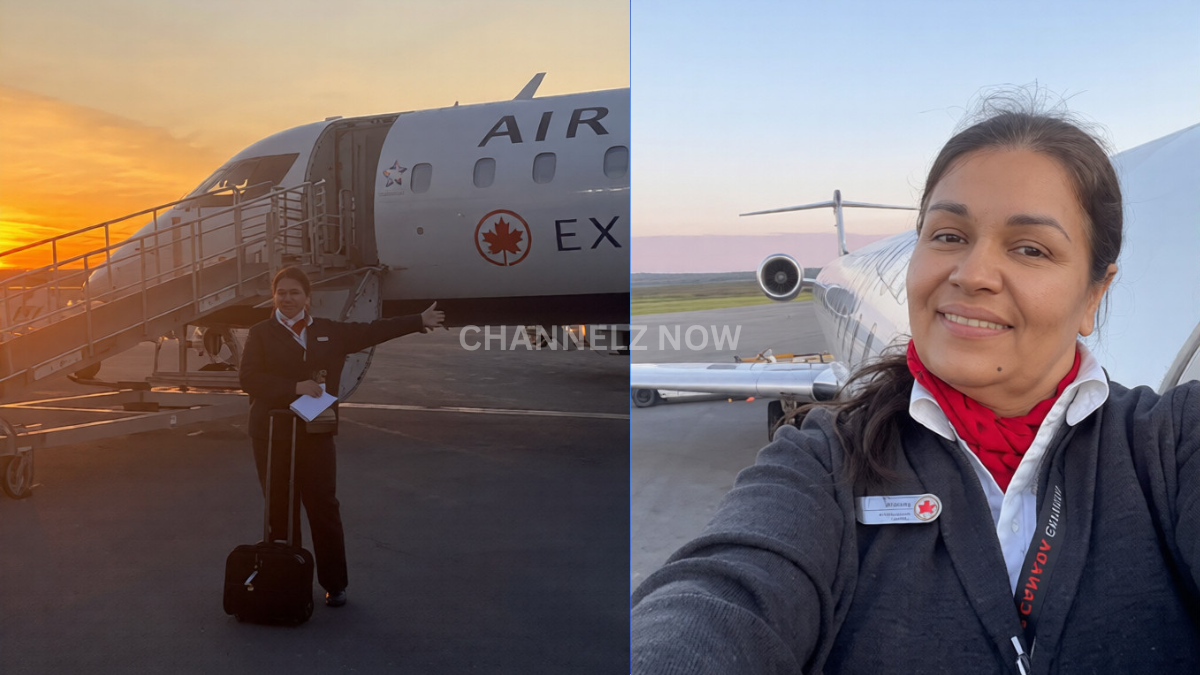
SOLANGE TREMBLAY, in the aftermath of the fatal runway collision at LaGuardia Airport, newly identified victims and survivors have brought further clarity to the scale and human impact of the incident.
Antoine Forest, a 30-year-old first officer, was among those killed when the Bombardier CRJ-900 aircraft operating as Air Canada Flight AC8646 collided with a Port Authority fire truck on the runway, with Forest, from Coteau-du-Lac, Quebec, having served as a CRJ first officer with Jazz Aviation since December 2022 after training at Cégep de Chicoutimi and flying for regional operators including Air Saguenay and Exact Air.

The captain of the aircraft was also killed in the collision, although their identity has not yet been publicly released. Amid the devastation, Solange Tremblay, a veteran flight attendant with decades of service, survived under extraordinary circumstances.
Tremblay was secured in her forward jumpseat at the time of impact and was violently ejected from the aircraft when the collision caused catastrophic structural failure, with reports indicating she was thrown a significant distance from the fuselage while remaining restrained in her seat.
Despite the severity of the incident, Tremblay survived with serious but non-life-threatening injuries, and according to her daughter, Sarah Lépine, she sustained a broken leg requiring surgical intervention but avoided additional critical trauma, with her survival described by family members as remarkable.
The collision occurred shortly before midnight when an air traffic controller cleared a fire truck to cross an active runway to respond to a separate aircraft reporting an onboard issue, and moments later the controller recognized the developing conflict and urgently attempted to stop the vehicle.
Audio recordings captured the escalating tension as repeated instructions were issued to halt movement, but the warning came too late to prevent the crash. Surveillance footage showed the CRJ-900 traveling at significant speed at the moment of impact, with the force shearing off the aircraft’s nose section and causing severe structural damage.
Aviation analysts noted that the consequences could have been even more severe if the aircraft’s fuel tanks had been affected. In the immediate aftermath, emergency responders arrived quickly as air traffic control instructed the flight crew to hold position while assistance was dispatched, while nearby pilots were also alerted, with one describing the situation over radio communications as difficult to watch.
The controller later acknowledged the error while managing multiple emergency situations, highlighting the complexity of the circumstances. The aircraft was carrying 72 passengers and four crew members, with 41 individuals requiring hospitalization, though most have since been treated and released, and injuries were also reported among those inside the fire truck.
While the incident has raised concerns about broader aviation challenges such as air traffic control staffing shortages, officials clarified that unrelated issues, including Transportation Security Administration screening delays, did not contribute to the crash. Federal investigators continue to examine runway incursion protocols, communication procedures, and emergency coordination to determine the exact sequence of events.